




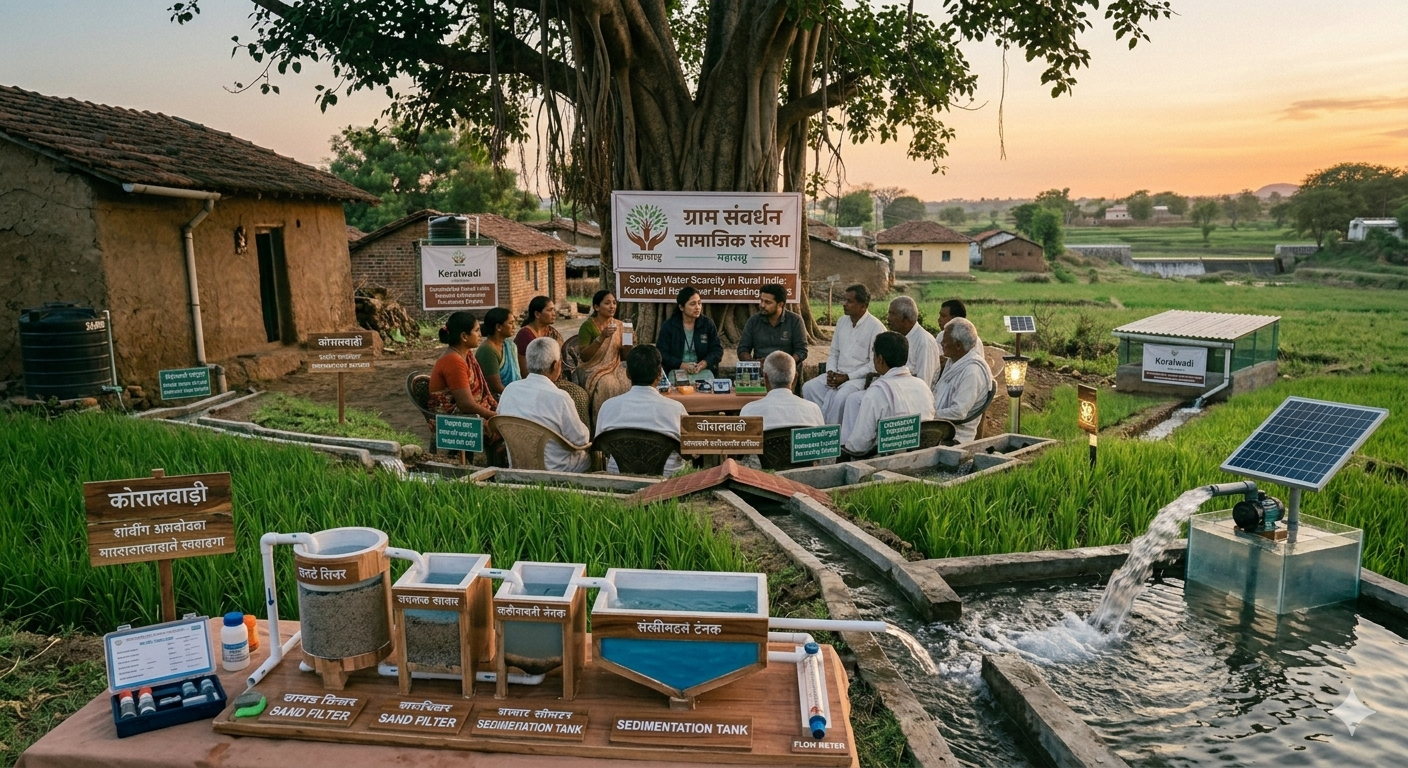
Solving Water Scarcity in Rural India: Koralwadi Rainwater Harvesting Project
Water scarcity in rural India is one of the most pressing challenges affecting millions of lives. From agriculture to daily household needs, the lack of reliable water sources creates a ripple effect that impacts health, income, and overall quality of life. In regions like Maharashtra—especially in tribal and remote villages—this issue becomes even more critical for sustainable living and economic stability.
To address this challenge, Gram Sanvardhan Samajik Sanstha (GSSS) initiated the Koralwadi Rainwater Harvesting Project—a sustainable and community-driven solution aimed at ensuring long-term water availability. This initiative stands as a powerful example of how grassroots interventions can create meaningful and lasting impact in rural communities.
Understanding Water Scarcity in Rural India
Water scarcity is not just about the absence of water—it is about the lack of access to clean, usable, and sustainable water resources. The Koralwadi Rainwater Harvesting Project highlights how rural areas struggle with water due to multiple interconnected factors:
- Irregular and unpredictable rainfall patterns
- Poor water management systems
- Lack of proper infrastructure
- Rapidly depleting groundwater levels
- Increasing impact of climate change
In villages like Koralwadi in Raigad district, these challenges have led to reduced agricultural productivity, poor sanitation, and limited livelihood opportunities. Women and children often travel long distances to fetch water, affecting education and overall well-being.
The Need for a Sustainable Solution
During on-ground surveys and community interactions conducted by GSSS, water scarcity emerged as the most urgent issue faced by the village. It became clear that solving this single challenge could positively impact multiple aspects of rural life.
The Koralwadi Rainwater Harvesting Project was designed not as a temporary fix but as a long-term, sustainable solution. The goal was to create a water management system that the local community could maintain independently, ensuring continuous benefits for years to come.
Project Overview: Koralwadi Rainwater Harvesting Initiative
The Koralwadi Rainwater Harvesting Project is structured to ensure water availability for up to 11 months a year. It focuses on a comprehensive approach that includes:
- Groundwater recharge
- Restoration of existing water sources
- Creation of new water conservation structures
This integrated model ensures that rainwater is not wasted but effectively captured, stored, and reused, creating a self-sustaining ecosystem.
Key Objectives of the Project
The project is built around clear, measurable, and impactful objectives:
- Improve groundwater levels across the village
- Ensure consistent water supply for domestic and agricultural use
- Reduce dependency on external or tanker water sources
- Enhance the overall quality of life for villagers
By achieving these goals, the Koralwadi Rainwater Harvesting Project aims to transform Koralwadi into a water-secure and resilient rural community.
Core Interventions Implemented
To effectively tackle water scarcity, the project combines traditional wisdom with modern engineering solutions.
1. Construction of Gabion Structures
Gabion structures—wire mesh boxes filled with stones—are installed across natural water flow paths.
Key benefits:
- Slow down water flow during rains
- Increase groundwater absorption
- Prevent soil erosion
- Improve moisture retention in soil
These structures play a crucial role in enhancing natural water recharge.
2. Borewell Recharging and Repair
Existing borewells are revived under the project through:
- Cleaning and flushing systems
- Repairing pipelines and infrastructure
- Installing necessary components
This ensures that existing resources are optimized rather than abandoned, making the system more efficient and cost-effective.
3. Open Well Restoration
Traditional water sources are strengthened through:
- Construction of protective parapet walls
- Development of recharge pits around wells
- Increasing storage and safety measures
This improves both the quality and availability of water for daily use.
Implementation Strategy
The success of the Koralwadi Rainwater Harvesting Project lies in its well-planned and systematic execution.
Step 1: Community Engagement
Villagers—including farmers, women, and youth—are actively involved in identifying problems and planning solutions.
Step 2: Technical Survey
Experts analyze the terrain, drainage patterns, and water flow to design effective interventions.
Step 3: Execution
Construction and restoration activities are carried out with technical supervision and local participation.
Step 4: Monitoring and Evaluation
Regular inspections ensure quality, efficiency, and timely progress.
Step 5: Community Handover
The project is handed over to the villagers, ensuring long-term sustainability and ownership.
Community Participation: The Backbone of Success
One of the strongest pillars of the Koralwadi Rainwater Harvesting Project is active community participation.
Villagers contribute through:
- Shramdaan (voluntary labor)
- Providing locally available materials
- Supporting implementation and maintenance
This involvement creates a sense of ownership and responsibility, ensuring that the project continues to deliver results even after completion.
Expected Impact on Rural Life
The project is expected to bring transformative and multi-dimensional changes to the village.
1. Improved Agriculture
- Increased crop yield
- Reduced dependency on rainfall
- Possibility of multiple cropping cycles
2. Better Health and Hygiene
- Improved access to clean water
- Reduced waterborne diseases
- Enhanced sanitation practices
3. Increased Income Opportunities
- Higher agricultural productivity
- Better financial stability for families
4. Reduced Migration
- Improved living conditions
- More local employment opportunities
Sustainability and Long-Term Vision
The Koralwadi Rainwater Harvesting Project is designed with a strong focus on sustainability.
Key elements include:
- Training villagers in maintenance practices
- Building local capacity for water management
- Promoting responsible and efficient water usage
This ensures that the benefits of the project continue for generations without external dependency.
The Role of Partnerships and CSR
The success of the project is further strengthened through CSR collaborations, which provide:
- Financial support for infrastructure development
- Access to technical expertise
- Monitoring and evaluation frameworks
These partnerships enable the scaling of impactful solutions and ensure accountability.
Why Rainwater Harvesting is the Future
The Koralwadi Rainwater Harvesting Project demonstrates why rainwater harvesting is one of the most effective solutions for rural water scarcity:
- Cost-effective and low maintenance
- Environmentally sustainable
- Highly reliable in rainfall-dependent regions
- Easily scalable across different geographies
It offers a practical and proven model that can be replicated in other water-stressed villages across India.
Conclusion
The Koralwadi Rainwater Harvesting Project is more than just a water conservation initiative—it is a catalyst for holistic rural development. By addressing water scarcity, it directly improves agriculture, health, livelihoods, and overall quality of life.
Led by Gram Sanvardhan Samajik Sanstha, this project showcases how community-driven, sustainable solutions can create long-term impact. It stands as a powerful inspiration for other rural regions facing similar challenges and highlights the importance of grassroots innovation in building a water-secure future for India.